Kling Video Generation and the Future of AI-Driven Content Creation
Understanding the Current Landscape of AI Video Tools
The field of AI video generation has moved from experimental demos to usable tools faster than most people expected. A year ago, generating a coherent short clip felt like a minor miracle. Today, platforms like Runway Gen-3, Pika Labs, and Luma AI Dream Machine produce results that can stand in for real footage in certain contexts. Sora from OpenAI raised expectations even higher, showing what might be possible with more compute and larger models. But among these developments, one name that has been quietly gaining traction is kling video generation, a system that approaches the problem from a slightly different angle.
Kling video generation focuses on maintaining temporal consistency across frames, which is the hardest part of this task. Many models produce stunning individual frames but fail to keep objects stable as they move. Kling tackles this by using a latent consistency model that enforces smooth transitions between frames. The result is footage that looks more like a real video and less like a slideshow of generated images. This matters for anyone building applications that rely on short video clips - marketers, game developers, and creative agencies all need consistency above flashy one-off frames.
How Model Routing Changes Access to These Tools
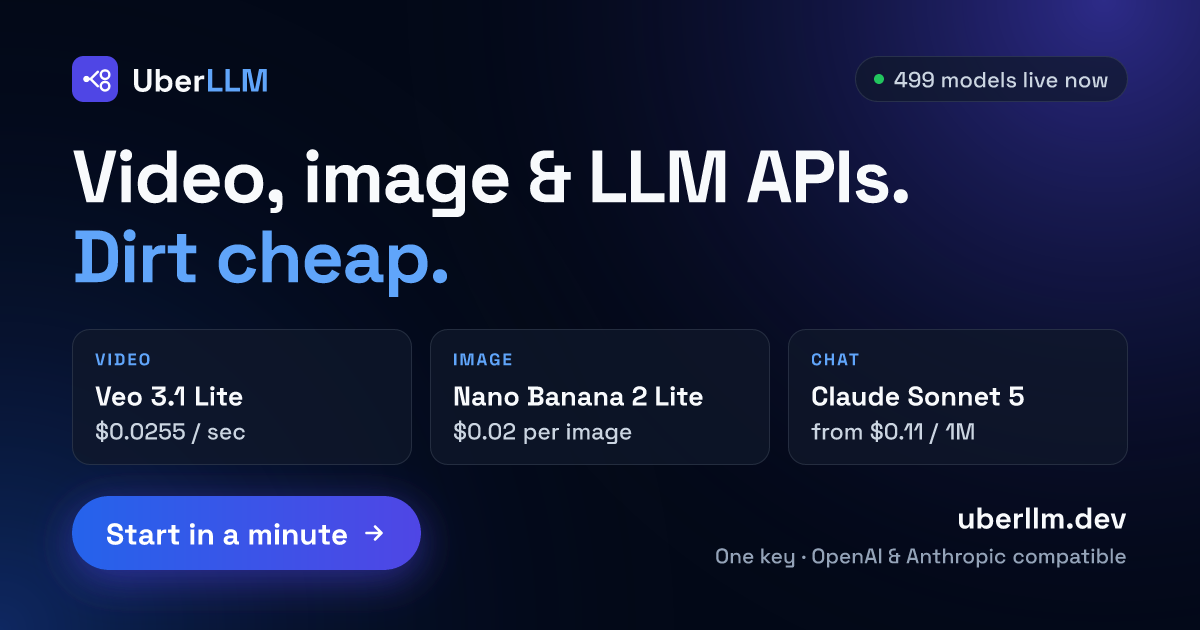
One of the biggest barriers to using AI video generation today is cost and complexity. Each model has its own API, pricing structure, and quirks. An API marketplace solves this by offering a single integration point that routes requests to the best available model based on price, latency, or quality. This is where the concept of model routing becomes important. Instead of signing up for five different services and managing five sets of keys, you connect to one endpoint. The marketplace handles the rest, selecting the cheapest or fastest option that meets your requirements.
For example, a developer building a video-to-video translation tool might need a model that can turn a simple sketch into a realistic clip. They could use Stable Video Diffusion for one style, then switch to Hailuo AI for something more cinematic. Without an API marketplace, this means writing custom code for each provider. With model routing, the marketplace decides which model to call based on the input parameters. This keeps costs down and speeds up development.
Replicate is one platform that has experimented with this model, but the idea of a true API marketplace with competitive seller routing is still emerging. The advantage is clear: you get access to a wide range of models - from CogVideo to Steerable Motion - without locking yourself into a single provider. If a new model outperforms the current best, the marketplace can route to it automatically.
Practical Considerations for Video Generation
When you start working with AI video generation, a few practical details matter. First, resolution and frame count. Most models produce short clips, often just a few seconds long. Kling video generation can produce clips up to about ten seconds at reasonable resolutions, but longer videos require stitching multiple clips together or using a model like ComfyUI with custom workflows. Second, prompt engineering for video is harder than for images. You need to describe motion, camera movement, and scene changes. A static prompt like "a cat sitting on a chair" works for an image but fails for video. You need to specify what happens over time.
Third, hardware matters. Running these models locally requires serious GPU power. NVIDIA cards with ample VRAM are the standard, but cloud APIs remove that burden. This is where the API marketplace model shines - you pay only for the compute you use, without investing in expensive hardware. Fourth, licensing and rights. Generated video may not be fully cleared for commercial use depending on the model's terms. Always check the license before using output in a product.
Fifth, evaluation. How do you know if a video is good? Metrics like FID and CLIP score help, but human evaluation is still the gold standard. Run multiple generations and pick the best one. Some platforms, like Hugging Face, host community benchmarks that compare models on specific tasks. Use those to guide your choice.
Comparing the Major Players
Runway Gen-3 is probably the most polished product right now, with a clean UI and strong results. It excels at stylized content but can be expensive for heavy use. Pika Labs offers a more playful interface and is good for rapid prototyping. Luma AI Dream Machine produces high-quality clips but has a steeper learning curve. Sora is still limited to certain users and use cases, but its underlying technology suggests it will be a major player once it opens up more broadly.
Stable Video Diffusion, developed by Stability AI and supported by the community on Hugging Face, is open-weight and can be run locally or through services like Replicate. It is a solid choice if you need to customize the pipeline or fine-tune on your own data. CogVideo from Meta offers another open option, though it requires more setup. Hailuo AI focuses on video-to-video translation, which is useful for style transfer and editing tasks. Steerable Motion, a newer entrant, emphasizes precise control over motion parameters, giving filmmakers fine-grained control.
Google has also entered the space with its own video generation models, though they are less widely available. Anthropic does not currently offer video generation, but their safety research informs how these models should be deployed responsibly. NVIDIA provides the hardware and some foundational models, but their main contribution is in making training and inference faster.
Each of these tools has trade-offs. Speed vs. quality. Cost vs. resolution. Openness vs. ease of use. An API marketplace that supports model routing lets you pick the right trade-off for each task without managing multiple integrations yourself.
What to Watch Out For
First, hallucination. Video models can generate impossible physics or objects that morph in unrealistic ways. Always review output before using it. Second, bias. Like all generative models, video models reflect biases in their training data. A model trained mostly on Western footage may not represent other cultures well. Third, copyright. Some models were trained on copyrighted material, and the legal landscape is still unclear. Use models with transparent training data when possible.
Fourth, latency. Real-time video generation is not here yet. Most models take several seconds to minutes per clip. If you need instant results, you may need to pre-generate content or use a simpler model. Fifth, cost. While prices are dropping, generating long or high-resolution videos can still add up. Model routing helps by always choosing the cheapest option that meets your quality bar.
Practical Workflows
For a typical project, the workflow might look like this: start with a text prompt and generate a short clip using kling video generation or a similar model. Review the output, adjust the prompt, and generate again. Once you have a few good clips, use video-to-video translation to change the style or add effects. Finally, stitch the clips together with editing software. Tools like ComfyUI allow you to chain these steps into a single pipeline, automating the process.
If you are building a product that generates video for users, consider using an API marketplace with model routing. This gives you flexibility to switch models as the field evolves. For example, if a new version of Runway Gen-3 comes out and offers better quality at a lower price, the marketplace can route to it automatically. You do not need to rewrite your code.
The Broader Trend: Commoditization of Video Generation
Video generation is following the same path as image generation. A year ago, only a few models existed. Now there are dozens, and the quality gap is shrinking fast. The real value is shifting from the model itself to the infrastructure around it: how you access it, how you combine it with other tools, and how you manage cost and quality. An API marketplace that supports competitive seller routing is the natural next step. It lowers the barrier for developers and lets them focus on building applications instead of managing model access.
Kling video generation is part of this trend, but it is not the only option. The key is to have choices and to route intelligently among them. That is where the industry is headed - toward flexible, cost-effective access to a growing ecosystem of generative models.